Implant-Supported Bridges Wellington –
Replace Multiple Missing Teeth

Book a dental appointment04 213 5355

Missing several teeth next to each other can affect your bite, chewing ability and the appearance of your smile. If you’re exploring implant-supported bridges in Wellington, Johnsonville Family Dentist can help you understand the available tooth replacement options.

An implant-supported bridge is a fixed dental restoration supported by implants rather than neighbouring natural teeth. It may be considered when two or more adjacent teeth are missing and suitable implant support is available.

Our Johnsonville clinic welcomes patients from Newlands, Churton Park, Broadmeadows and surrounding Wellington suburbs.

A dental assessment can help determine whether an implant bridge, conventional dental bridge, denture or another treatment option may be suitable.
Book a Dental Implant Consultation | Call 04 213 5355

Implant Bridge Restorations in Johnsonville

Replacing several missing teeth involves more than filling the visible space.

Missing teeth can affect chewing, bite function and the position of remaining teeth. Depending on the circumstances, changes may also occur in the jawbone and surrounding gum tissues.

An implant-supported bridge provides one option for replacing adjacent missing teeth without relying solely on neighbouring natural teeth for support.

At Johnsonville Family Dentist, patients can discuss restorative treatment options, including assessment, planning and any appropriate referral arrangements.

The recommended treatment depends on your dental health, available bone and individual needs.

Benefits of Implant-Supported Bridges

Replacing Multiple Missing Teeth

An implant bridge may replace several neighbouring teeth using a connected restoration.

This can help restore appearance and chewing function for suitable patients.

Preserving Adjacent Natural Teeth

A conventional tooth-supported bridge commonly requires preparation of neighbouring teeth.

An implant-supported bridge can sometimes avoid that preparation by using implants as its supports.

Fixed Tooth Replacement

Implant bridges are generally fixed restorations, meaning patients do not routinely remove them for daily cleaning.

Long-Term Restorative Option

Implants and their restorations can function for many years with appropriate care.
However, implants are not guaranteed to last a lifetime, and the bridge or supporting components may require maintenance, repair or replacement.

Support for Chewing Function

When clinically successful, a well-designed implant bridge can improve chewing function and provide stable tooth replacement.

The degree of improvement varies between patients.

What Is an Implant-Supported Dental Bridge?

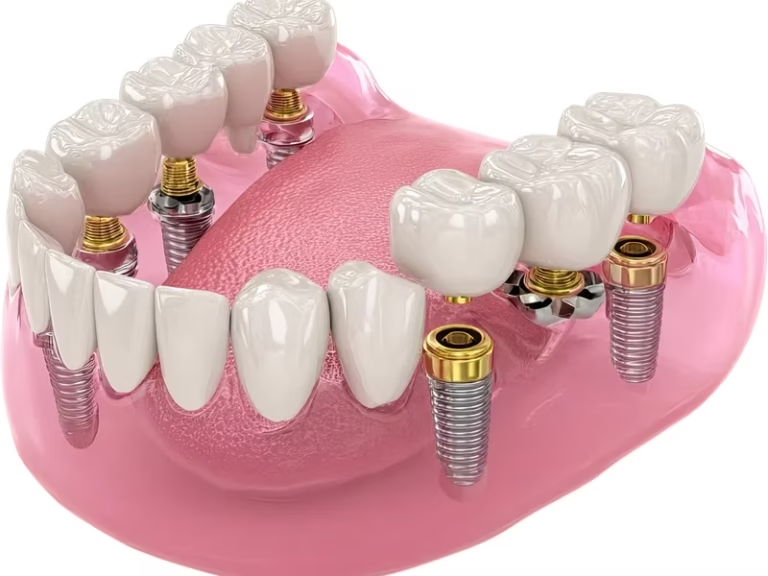
An implant-supported bridge is a dental prosthesis used to replace multiple missing teeth.
It is supported by dental implants that are surgically positioned within the jawbone.
The restoration generally consists of:

  • Dental implant fixtures placed within suitable areas of the jawbone
  • Connectors or abutments attached to the implants
  • A custom-made bridge containing replacement teeth

Unlike a conventional dental bridge, an implant-supported bridge does not usually depend on adjacent natural teeth as its primary supports.

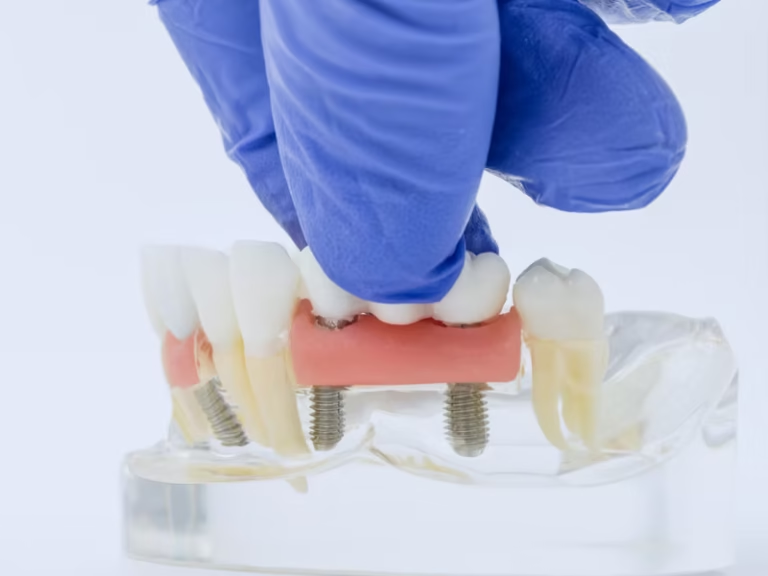
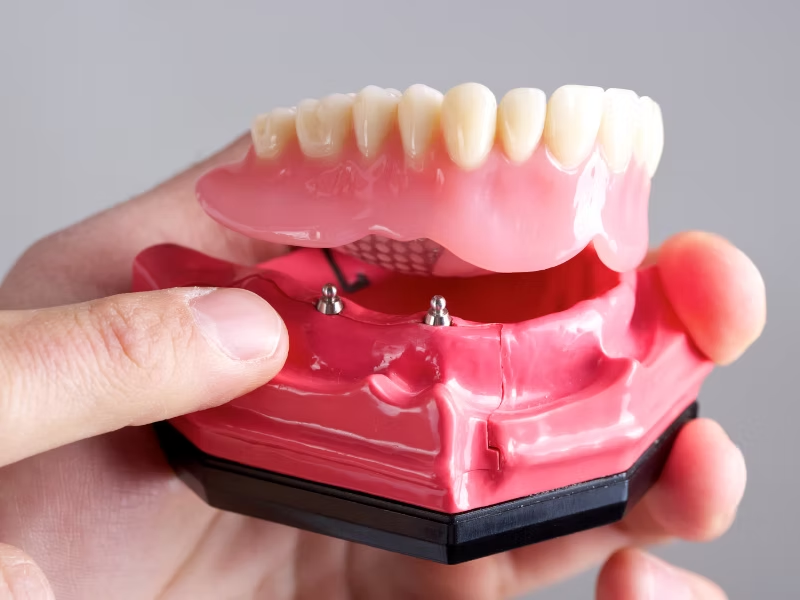
The number and placement of implants depend on the treatment plan. For example, some bridges replacing several adjacent teeth may be supported by two implants, but this is not appropriate for every case.

Implant-Supported Bridges vs Traditional Dental Bridges

Both treatments can replace missing teeth, but they use different support systems.

Conventional Dental Bridges
A conventional bridge is typically attached to neighbouring natural teeth.
These supporting teeth may need to be prepared to accommodate crowns or other bridge components.

This option may be appropriate when the neighbouring teeth already require restorations or when implant treatment is unsuitable.

Implant-Supported Bridges
An implant bridge is supported by implants placed within the jawbone.
It generally involves surgical treatment and a healing period before the final restoration is fitted.

Implant treatment also depends on having suitable bone, gum health and other clinical conditions.

Neither option is automatically better for every patient.

Related Service: Dental Bridges Wellington

Who May Be Suitable for an Implant-Supported Bridge?

Implant-supported bridges may be considered when several adjacent teeth are missing.

Your dentist will assess factors such as:

Available Jawbone
Dental implants need appropriate bone support.
If bone volume is insufficient, additional treatment or an alternative restoration may be necessary.

Gum Health
Healthy surrounding tissues are important for implant treatment and long-term maintenance.
Active periodontal disease may need treatment before implant therapy.

Condition of Remaining Teeth
The position and condition of surrounding teeth can influence the choice between an implant bridge and conventional bridgework.

Medical History and Healing
Certain medical conditions, medications and smoking may increase treatment risks or affect healing.

Cleaning and Maintenance
Implant bridges require careful daily cleaning around the implants and underneath the replacement teeth.

Your dentist can explain whether an implant bridge is appropriate after examining your oral health and discussing your preferences.

Implant-Supported Bridge Treatment Process

Treatment generally involves several stages. Your individual plan may differ according to the complexity of the restoration.

Step 1 – Dental Assessment
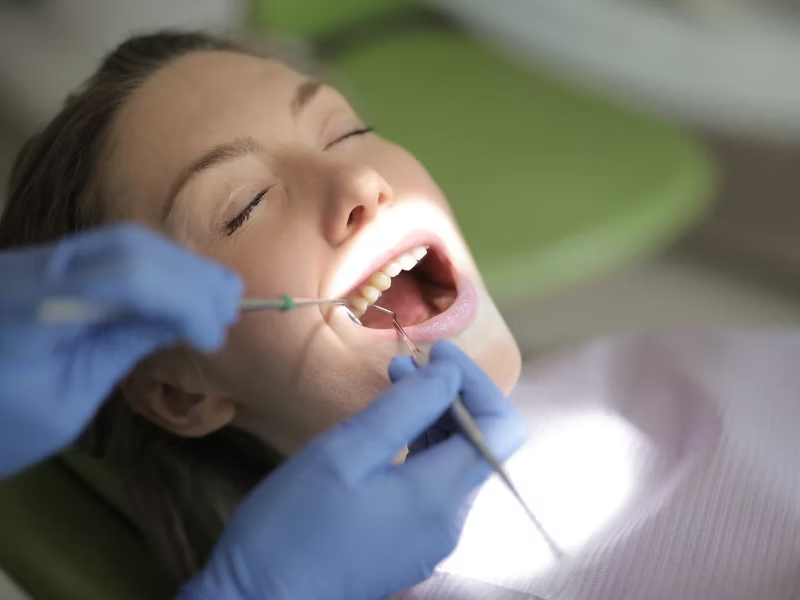
Your dentist reviews the missing-tooth area, existing teeth, gums and bite.
Dental X-rays and, where indicated, three-dimensional imaging may be recommended to assess the jawbone.

Step 2 – Restorative Treatment Planning
The treatment plan considers the number of missing teeth, implant positions, bridge design and overall oral health.
Your dental team can explain any necessary preliminary procedures or referral arrangements.

Step 3 – Implant Placement
Where clinically appropriate, dental implants are surgically placed by an appropriately qualified treating clinician.
Local anaesthetic is commonly used.
Some patients may require treatment with a separate surgical provider before the restorative phase.

Step 4 – Healing and Bone Integration
After placement, the surrounding bone needs time to integrate with the implants.
This process, called osseointegration, commonly takes several months, although healing times vary.
A temporary restoration may be considered where clinically appropriate.

Step 5 – Fitting the Implant Bridge
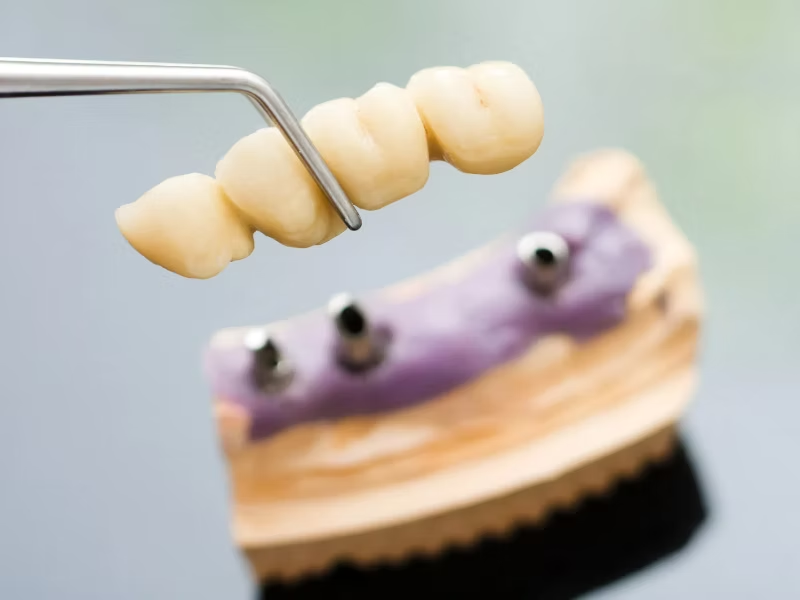
Once the implants are suitable for restoration, the replacement bridge is manufactured and fitted.
Your dentist assesses its fit, appearance, bite and cleaning access.

Step 6 – Follow-up and Maintenance
Regular reviews help monitor the implant tissues, bridge components and overall oral health.
Maintenance or repair may be required over time.

Implant Bridges vs Implant-Supported Dentures

An implant bridge is generally a fixed restoration supported by dental implants.

Implant-supported dentures may be removable or fixed, depending on the design.

Removable implant-retained dentures can be detached for cleaning, while a fixed bridge normally remains attached and requires cleaning around and beneath the restoration.

The choice depends on the number of missing teeth, jawbone, treatment goals and clinical findings.

Related Service: Implant-Supported Dentures Wellington

Risks and Limitations of Implant Bridge Treatment

As with other dental implant procedures, risks and complications are possible.
These may include:

  • Discomfort, swelling or bleeding after surgical placement
  • Infection or delayed healing
  • Failure of an implant to integrate with bone
  • Inflammation or bone loss around implants
  • Damage to nearby anatomical structures
  • Bridge or component loosening
  • Fracture or wear of restorative materials
  • The need for repair, further treatment or implant removal

Your treating clinician will explain the risks and available alternatives before treatment.

How Much Do Implant-Supported Bridges Cost in Wellington?

The cost of an implant-supported bridge depends on the treatment plan and restoration required.

Factors influencing fees may include:

  • Dental consultations and imaging
  • Number of implants required
  • Implant placement and surgical complexity
  • Additional procedures, such as bone augmentation
  • Number of replacement teeth
  • Bridge materials and laboratory work
  • Temporary restorations
  • Specialist referrals and follow-up care

A bridge replacing a few teeth can involve different costs from a full-arch restoration.

Following an examination, your dental team can explain the proposed treatment stages and estimated costs.

For current consultation information, call 04 213 5355.

Caring for an Implant-Supported Bridge

Implant bridges require regular home care and professional monitoring.

Your dentist may recommend:

  • Brushing twice daily with suitable toothpaste
  • Cleaning underneath the bridge using appropriate floss or interdental aids
  • Cleaning carefully around implant-supported components
  • Attending recommended hygiene and dental appointments
  • Avoiding smoking
  • Reporting persistent bleeding, swelling, pain or movement around the
  • restoration

Although implant materials cannot develop tooth decay, the surrounding gum and bone tissues can develop inflammatory disease.

Your dental team can demonstrate suitable cleaning methods for your bridge.

Implant-Supported Bridges in Johnsonville – Serving Wellington

Johnsonville Family Dentist welcomes patients seeking advice about missing-tooth replacement options in Wellington.

Our clinic is located in Johnsonville, convenient for patients from Newlands, Churton Park, Broadmeadows, Grenada Village and surrounding areas.

Johnsonville Family Dentist
Level 1, Suite 6/120 Johnsonville Road, Johnsonville, Wellington

Phone: 04 213 5355

Contact the clinic to discuss an appropriate restorative dental consultation.

What is an implant-supported bridge?

An implant-supported bridge is a connected dental restoration that replaces multiple missing teeth and is supported by dental implants.

How many implants are needed for a dental bridge?

The number depends on how many teeth are missing, the available bone and the planned bridge design. Your treating clinician will determine the appropriate arrangement.

Is an implant bridge better than a conventional bridge?

Each has advantages and limitations. Implant bridges can avoid preparing neighbouring teeth in selected cases but involve surgery and healing time.

How long does implant bridge treatment take?

Treatment commonly takes several months because implants generally need time to integrate with the bone. Additional procedures may extend the timeline.

Does implant bridge treatment hurt?

Implant placement is commonly performed using local anaesthetic. Temporary discomfort or swelling may occur afterwards.

Can implant bridges replace front or back teeth?

Implant-supported bridges may be suitable in different areas of the mouth, depending on anatomy, available bone and restorative requirements.

How do I clean under an implant bridge?

Cleaning aids such as suitable floss, interdental brushes or other devices may be recommended. Your dentist will demonstrate the appropriate technique.

How much does an implant-supported bridge cost in Wellington?

Costs vary depending on implant numbers, surgery, restorative materials and treatment complexity. An individual assessment is necessary for an estimate.

Book a Dental Implant Consultation in Wellington

If you are missing several adjacent teeth, Johnsonville Family Dentist can help you explore suitable replacement options, including conventional bridges, implant-based restorations and dentures.

An assessment can help determine the most appropriate treatment pathway for your dental health.

Johnsonville Family Dentist
Level 1, Suite 6/120 Johnsonville Road, Johnsonville, Wellington
Phone: 04 213 5355
Book an Appointment Online

"*" indicates required fields

Name*
Emergency Appointment