
Call usBook Now
Skip to main content

Dental Implants Wellington – Replace
Missing Teeth

Book a dental appointment04 213 5355
Untitled design (14)

Missing teeth can affect how you chew, speak and feel about your smile. If you are considering dental implants in Wellington, Johnsonville Family Dentist can help you explore suitable options for replacing missing teeth.

Dental implants are a long-term restorative treatment option designed to support replacement teeth, including crowns, bridges and certain dentures.

Our clinic is located in Johnsonville, welcoming patients from Newlands, Churton Park, Broadmeadows and surrounding Wellington suburbs.

Whether you are missing a single tooth or several teeth, a dental consultation can help determine which replacement options may be appropriate for your oral health, treatment goals and budget.
Book a Dental Implant Consultation | Call 04 213 5355

Dental Implant Treatment in Johnsonville

At Johnsonville Family Dentist, dental implant treatment forms part of our approach to helping patients explore options for replacing missing teeth.

When a tooth is lost, the surrounding teeth and jawbone may change over time. Depending on the location of the missing tooth, these changes can affect chewing, appearance and the stability of neighbouring teeth.

Dental implants provide one option for restoring missing teeth without relying entirely on adjacent teeth for support.

The treatment generally involves placing an implant into the jawbone, allowing healing and then attaching a suitable replacement tooth or prosthesis.

Your dental team will assess your oral health, explain the available treatment options and coordinate appropriate treatment or referrals based on your individual needs.

Untitled Design (6)

What Are Dental Implants?

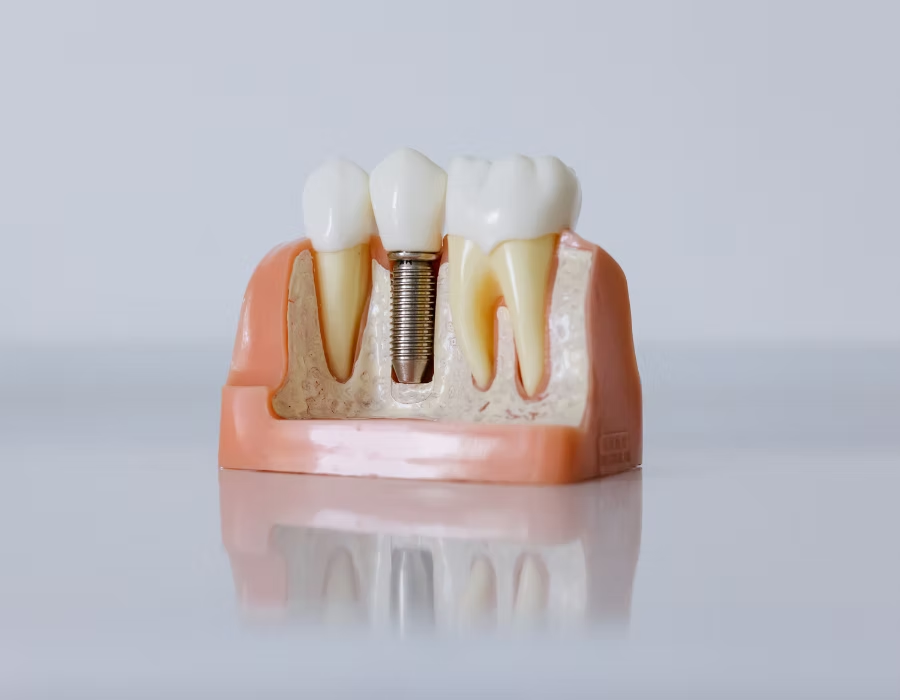
A dental implant is an artificial tooth-root replacement, usually made from titanium or a suitable titanium alloy, designed to support a dental restoration.
A complete implant-supported replacement generally includes three components.

Dental Implant Fixture
The implant fixture is placed within the jawbone and acts as the foundation for a replacement tooth.
Over time, the surrounding bone may bond with the implant surface through a process called osseointegration.

Implant Abutment
An abutment is a connector that links the implant to the final restoration.
Different types of abutments may be selected depending on the implant system and restorative requirements.

Dental Crown, Bridge or Denture
The visible replacement may be an individual dental crown, an implant-supported bridge or an implant-retained denture.
The appropriate restoration depends on the number of missing teeth, available bone, surrounding teeth and treatment plan.

Who May Be Suitable for Dental Implants?

Dental implants may be considered for adults who have lost one or more teeth and have suitable oral and general health.
An assessment is required to determine suitability.
Important considerations include:

Adequate Jawbone
Implants require appropriate bone support. Where bone volume is insufficient, bone grafting or an alternative treatment may be discussed.

Healthy Gums
Active gum disease may require treatment before implant placement. Ongoing gum health remains important after treatment.

General Health and Medications
Certain medical conditions and medications may affect healing or increase treatment risks. Your treating clinician will review relevant medical information as part of the assessment.

Smoking
Smoking can increase the risk of complications and implant failure. Patients who smoke should discuss these risks with their clinician.

Benefits of Dental Implants

Dental implants offer several potential advantages for patients who are suitable for treatment.

1. Natural-Looking Tooth Replacement
Implant-supported crowns and bridges can be designed to resemble surrounding natural teeth in shape and appearance.
The final appearance depends on implant positioning, gum tissues, restorative materials and individual anatomy.

2. Improved Chewing Function
Replacing missing teeth with an implant-supported restoration may improve chewing function and make it easier to eat a wider range of foods.
The degree of improvement varies between patients.

3. Support for Jawbone Maintenance
After tooth loss, the jawbone in the affected area may gradually change.
Implants transfer functional forces to the surrounding bone and may help maintain bone around the implant site. However, they do not guarantee that bone loss will be prevented.

4. Reduced Reliance on Adjacent Teeth
A single dental implant may allow replacement of a missing tooth without preparing neighbouring teeth for a conventional tooth-supported bridge.

5. Stable Tooth Replacement
When an implant integrates successfully and is restored appropriately, it can provide stable support for a crown, bridge or denture.

6. Long-Term Restorative Option
Dental implants can function for many years with appropriate care, regular professional monitoring and suitable oral hygiene.
However, implants and their restorations are not guaranteed to last a lifetime. Maintenance, repair or replacement may be required.

Types of Dental Implant Restorations

Dental implants may be used to replace one tooth, several teeth or support certain removable and fixed prostheses.

Single Tooth Dental Implants
A single implant-supported crown may be suitable for replacing one missing tooth.
This option can provide an independent restoration without necessarily altering the teeth on either side.
A consultation is required to assess the available space, bone and gum tissues.

Learn More: Single Tooth Implants Wellington

Implant-Supported Bridges
When several teeth are missing, implants may be used to support a bridge replacing multiple teeth.
The number and positioning of implants depend on the treatment plan and the condition of the jawbone.

Learn More: Implant-Supported Bridges Wellington

Implant-Supported Dentures
Some dentures can be supported or retained by dental implants to improve their stability.
Implant-supported dentures may be removable or fixed, depending on the design and clinical circumstances.

Learn More: Implant-Supported Dentures Wellington

Full Mouth Dental Implant Options
For patients missing most or all teeth in one or both jaws, implant-supported full-arch restorations may be considered.
These treatments require comprehensive assessment and may involve specialist planning or referral.

The suitability of full-mouth implant treatment depends on oral health, bone availability, medical factors and treatment goals.

CLASSIC HOMES (13)

Dental Implant Treatment Process – What to Expect

Dental implant treatment usually involves several stages. The exact sequence and timeline depend on the patient’s oral
health and the type of restoration required.

Step 1 – Initial Dental Implant Consultation

The first stage involves discussing your dental concerns, treatment goals and medical and dental history.

Your dentist will examine the teeth, gums and missing-tooth areas.

Dental X-rays and, where indicated, three-dimensional imaging may be recommended to assess the jawbone and surrounding structures.

The assessment helps determine whether implants are suitable or whether alternative treatments should be considered.

Step 4 – Healing and Osseointegration

After placement, the surrounding tissues need time to heal.
The bone may gradually integrate with the implant surface, providing support for the future restoration.

Healing periods vary depending on the treatment site, bone condition and individual factors. Several months may be required before the final restoration is completed.

Step 2 – Treatment Planning

Your treatment plan may consider:

  • The number and location of missing teeth
  • Jawbone volume and quality
  • Gum and periodontal health
  • The position of neighbouring teeth
  • Bite and chewing forces
  • Medical conditions and medications
  • Smoking and other relevant risk factors
  • The type of final replacement teeth

Some patients may require preliminary treatment such as management of gum disease, extraction of unsuitable teeth or bone augmentation before implant placement.

Step 5 – Implant Restoration

Once the implant is suitable for restoration, an abutment and replacement tooth or prosthesis may be fitted.

The restoration is designed with consideration for appearance, function, comfort and bite alignment.

Step 3 – Dental Implant Placement

When clinically suitable, the implant fixture is surgically placed into the jawbone by an appropriately qualified treating clinician.

Local anaesthetic is commonly used, with other anaesthesia or sedation options considered where appropriate.

Some patients may have implant placement arranged with a separate clinician before returning for restorative treatment.

Step 6 – Ongoing Review and Maintenance

Regular dental assessments and appropriate home care help monitor the implant, surrounding gums and restoration.

Your clinician will recommend a maintenance schedule based on your individual needs.

Contact Johnsonville Family Dentist

Untitled Design

"*" indicates required fields

Name*
Emergency Appointment